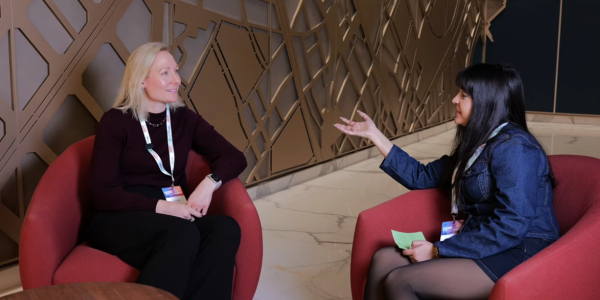
Tilting Point’s Growth Strategy: An Interview with Sylvain Etard
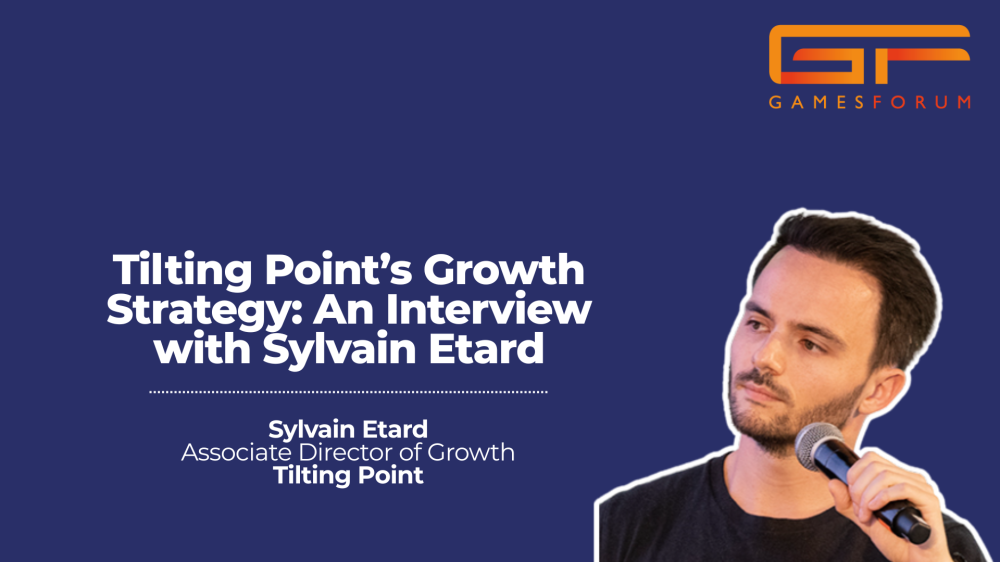
Could you give us a quick intro to yourself?
I have been in the industry for 7 years, and at Tilting Point, for 4 years. I started as a classic UA manager, and I’m now taking care of UA, ASO and ad Monetization for my portfolio of games.
How did you first get into the mobile gaming industry?
I was passionate about video games! My first experience was in Paris in a hyper- casual company called Green Panda Games. UA and Ad Monetization on hyper-casual certainly was a different job before, but I learned a lot there.
How has the shift to in-app bidding affected your key revenue metrics like eCPM, ARPDAU, and fill rates? Were gains consistent across regions and networks?
On top geos, improvements were not significant as we were always optimising to the best of our ability. Fill rates slightly improved, but eCPM and ARPDAU did not improve much.
However, for other geos, the level of granularity required to have the same performance was too thin, thus bidding really helped us there.
Which networks or demand sources have surprised you the most (positively or negatively) after transitioning to bidding, and why?
All the big players (Google, Meta, Unity & Ironsource) somehow kept their strong position in our rev share and delivered to the level we expected them to.
A good surprise was HyprMX - we had recently added them as a manual placement partner, and this became our top 5 bidding partner in a matter of weeks.
How is AI influencing your mediation strategy today, particularly around price floors, impression routing, and yield optimization? Where do you still see transparency gaps?
We operate mostly with bidding, so we don’t use AI much for mediation on the manual placements. Most AI influence comes from the networks’ own bidding algorithms, not from our side. Our biggest transparency gaps are understanding why certain bids win, how DSPs route demand, and how network-side optimisations affect our eCPM and fill.
What are the biggest operational or technical challenges during your transition to bidding?
On the technical side, most networks made the transition straightforward - moving from manual placements to bidding generally required only updating to the latest SDK or adapter, without any additional work.
Operationally, the main challenge was ensuring that bidding consistently outperformed our manual setups while still maintaining healthy KPIs, especially fill rate. We also had to carefully balance the shift so that bidding didn’t negatively impact competition within our remaining manual placements.
What can we expect to hear from you at Gamesforum Barcelona?
I’ll be sharing a broader, more holistic perspective rather than a purely ad-monetization-focused one. Since I also oversee UA for my games, I’m in a good position to create synergies between acquisition and monetization (and sometimes product). I plan to speak about how aligning these functions can drive more sustainable growth, improve efficiency, and unlock opportunities that aren’t possible when teams operate in silos.
Hear more from Sylvain Etard at Gamesforum Barcelona 2026...







Home of the Gamesforum events series and leading mobile game analysis. Discover everything you need to know about mobile games marketing and monetization.