







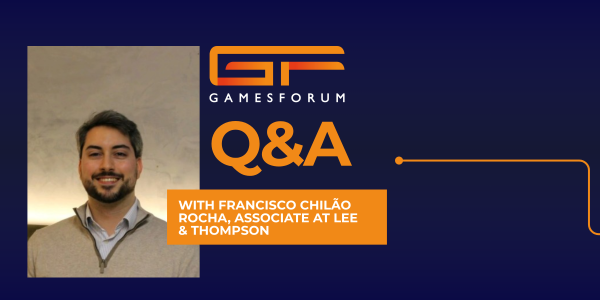





Francisco Chilão Rocha: Why Digital Fairness Is Reshaping Mobile Gaming

Francisco Chilão Rocha: Why Digital Fairness Is Reshaping Mobile Gaming image
By Nicole Lumley 3 August 2026

As mobile games become more sophisticated, so do the expectations placed on the companies behind them. From digital fairness and AI to evolving consumer protection laws, legal considerations are increasingly shaping how games are designed, marketed and monetised.

Ahead of his session at Gamesforum London, Francisco Rocha, lawyer at Lee & Thompson, shares his perspective on the biggest regulatory shifts facing the industry, why compliance can be a competitive advantage, and what every games business should be thinking about before and after launch.

Q: For those who may not know, tell us about you and what you do.

I'm Francisco Rocha, a UK and EU qualified lawyer specialising in video games and interactive entertainment at Lee & Thompson, a specialist firm in London. Our team has over 20 years of video game experience, having been in-house and in private practice. We advise developers, publishers, platforms and service providers across the games ecosystem on commercial, regulatory and intellectual property matters. This includes helping clients from all over the world, on all platforms and of all sizes (from indies to AAA).

I definitely believe that being a gamer myself has a major impact in how I'm able to advise our clients in the industry (and in liking doing my job).

Q: To start broadly, how would you define “digital fairness” in the context of mobile games, and why has it become such a regulatory focus now?

At its core, digital fairness is about making sure players can make informed choices and are treated fairly throughout their experience with a game, from the moment the player has access to the game page or adverts, to the way they engage with the game and other players, on things like pricing, monetisation practices, ads, player data, age-appropriate design, and game mechanics.

It's become such a major regulatory focus due to several reasons, one of which is the size of the mobile games industry (both by reach and by revenue), which is bigger than all the other platforms combined and the video games industry is also bigger than film+tv+music industries combined.

Other reasons include the fact mobile games are played by every age demographic, from grandchildren to grandparents, who are able to play mobile games on a daily basis (and in some/most cases, engage financially with them), or the fact that there are millions of mobile games available to users and not all meet the same compliance and regulatory thresholds.

Q: What's been the biggest shift you've witnessed in the industry?

I would say, as a consumer and game collector, the transformation of games from standalone products you bought physically to mostly digital products and live-service games.

This is especially relevant today, as Sony recently announced that from January 2028 there won't be physical copies of Sony console games, which will have impacts on a competition and market level but also on the industry, with several companies potentially losing out on a potential revenue stream, from retailers to service providers.

On the second point, today, many games are living ecosystems that combine content updates, social features, user-generated content, creator partnerships, virtual economies, subscriptions, and sophisticated monetisation systems.

A games company today, and particularly relevant on mobile, stopped being just the makers of an entertainment product. They're now often operating a marketplace, a social platform, an advertising channel and a data-driven service all at the same time.

Lastly, and on a general note, AI has accelerated this trend even further. We've received queries on how to use generative AI (responsibly) in games, who owns AI-generated games (wholly and partially), inputs, outputs, etc, how to manage the amounts of data these companies are obtaining, and what disclosures may be required.

It's an incredibly exciting time (especially considering my job), but also one that requires thought and legal analysis.

Q: Do you see regulation as something that limits innovation, or can it actually encourage better products?

In a way both. Whereas relevant regulation should ultimately encourage better products and more informed users/companies, poorly designed regulation can certainly create friction and uncertainty. Nevertheless, one will most likely see me on the for-regulation side, as ultimately we need regulations in place to protect users (e.g. information or transparency vs vulnerabilities) and companies (e.g. intellectual property or competition).

A good example is transparency and fairness, which has been at the forefront of both the UK and EU's "collective minds". Whether we're talking about monetisation, (influencer) advertising or AI-generated content, players increasingly expect openness, and this is something that's seen across social media, store fronts and even in market trends.

Companies that embrace those expectations often find that compliance becomes a competitive advantage rather than a burden. A perfect example of this is Valve with its Steam platform, where it operates with a large competitive advantage mostly due to its policies that benefit users, even when PC is mostly (if not all in today's day) digital.

Q: What's one thing you hope attendees will take away from your talk?

The key takeaway should be that every company should be thinking of legal requirements as a true requirement, both in the pre and post launch stage of any game, and not just an optional feature. This should mould both the business and the game.

Whether we're talking about the EU Digital Services Act, the UK Online Safety Act, evolving rules around loot boxes, AI governance or consumer protection, these issues can directly affect monetisation, live operations, user acquisition and product strategy, which then will lead to direct impacts on the companies.

Ultimately, I'd like to make everyone aware that a legal representative, whether in-house or external, is there to help at every step of the process and not only for when a problem arises.

SIGN UP TO OUR NEWSLETTER

You’ll receive our leading content, news and info about upcoming webinars, podcasts and of course discounts to our live Gamesforum events

Sign up now