Built for two audiences: how Sago Mini designs play for kids and parents
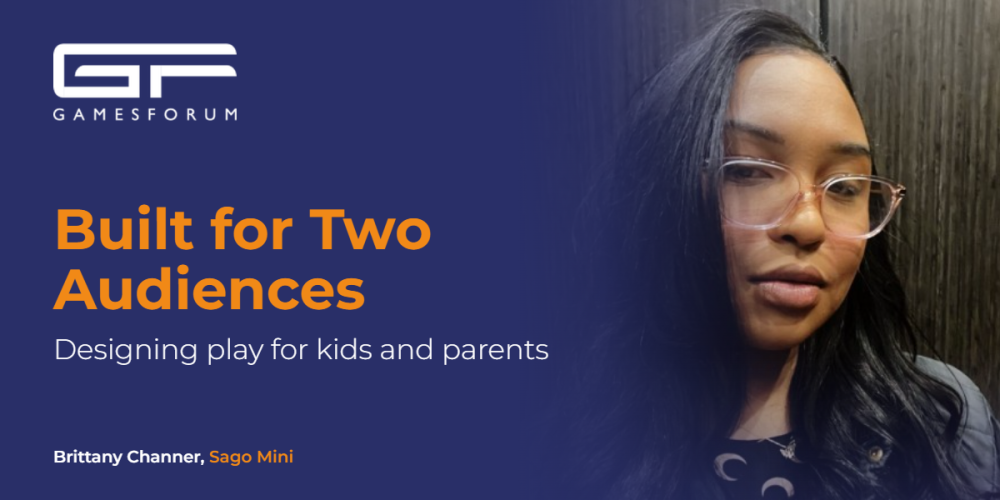
Making games for two-to-seven-year-olds means designing for two audiences at once: the kids who play and the parents who pay. In a Day 2 session bridging the apps and games tracks, Brittany explained how her studio balances the two.
From physical toys to “digital toys”
The studio began as a physical toy company, and that history still shapes its approach. Rather than games, the team describes what it makes as digital toys: open-ended play sets that bring physical play patterns to a 2D screen. That catalogue now sits inside Piknik, a subscription bundle of 10+ ad-free apps for kids aged roughly two to seven.
The apps have no instructions or tutorials. Kids are put in front of the screen, and the team watches what they do. Parent controls are kept fully separate, so the kids’ space stays purely about play.
Playtesting at the daycare around the corner
Twice a week, the team carries a bag of iPads to a partner daycare a block from the studio. Watching kids play together has an unexpected QA benefit: multiple small hands on one screen stress-test the build and led the studio to support multi-touch.
Success is often qualitative. Are they laughing? Are they telling stories as they play? The team notes what kids try to tap and expect to be interactive, then builds around that. Paper prototypes help too: kids are shown symbols and asked what they mean, which surfaces gaps between adult assumptions and how kids actually read things. Remote testing via PlaytestCloud and an in-house network of parent testers to fill in the rest.
Attention spans are a metric in their own right. If a child won’t spend five seconds on a concept, that’s a clear signal.
Licensing Gabby’s Dollhouse
In July the studio launched a Gabby’s Dollhouse game, built on the DreamWorks show that’s among Netflix’s top preschool titles. Brittany’s production approach with large partners is to drive the deadlines: put a proposal on the table rather than wait for direction, so feedback has something concrete to react to.
The partner review process brought new considerations. One example: a bathroom where kids mix soap and toothpaste into a hair-changing “magic potion”. It was flagged because it could suggest mixing and eating household products. The lesson was to identify high-risk moments early and check that real-life routines are represented safely.
What the subscription data revealed
Moving to the subscription model in 2023 was, Brittany said, one of the studio’s best bets, with 30–40% of existing parents converting within about a year. Child profiles gave the team new insight into what kids choose, and one finding stood out: kids spend 3.5x more time on open-ended play-set apps than in topic-driven ones about weather, bugs or reading.
So, education now comes through discovery rather than instruction. A child turning ingredients on a toy stove learns a breakfast routine. Recurring players also develop a “language” of play: they expect that tapping things will do something, and playtests show where those expectations go unmet.
UA: win the kid, then reach the parent
Growth is a mix of organic and paid. Strong proprietary IP drives community content, and the Gabby’s Dollhouse partnership earned an Apple front-page feature that the studio’s other apps don’t usually get. User acquisition starts with the child: they discover the characters, get attached, and then need a parent to unlock more. Sell screens never appear in mid-play. Instead, locked icons on menus prompt kids to fetch a parent behind an age gate.
Looking ahead
Brittany expects more of the kids’ market to move toward subscription bundles, organic discovery to keep getting harder, and IP partnerships to become a key route to app-store visibility. Her advice to the room: let your players tell you what’s valuable, and double down on it.


Home of the Gamesforum events series and leading mobile game analysis. Discover everything you need to know about mobile games marketing and monetization.