How Aurion11 Helped Sofascore Unlock 50% More Programmatic Revenue From Existing Inventory
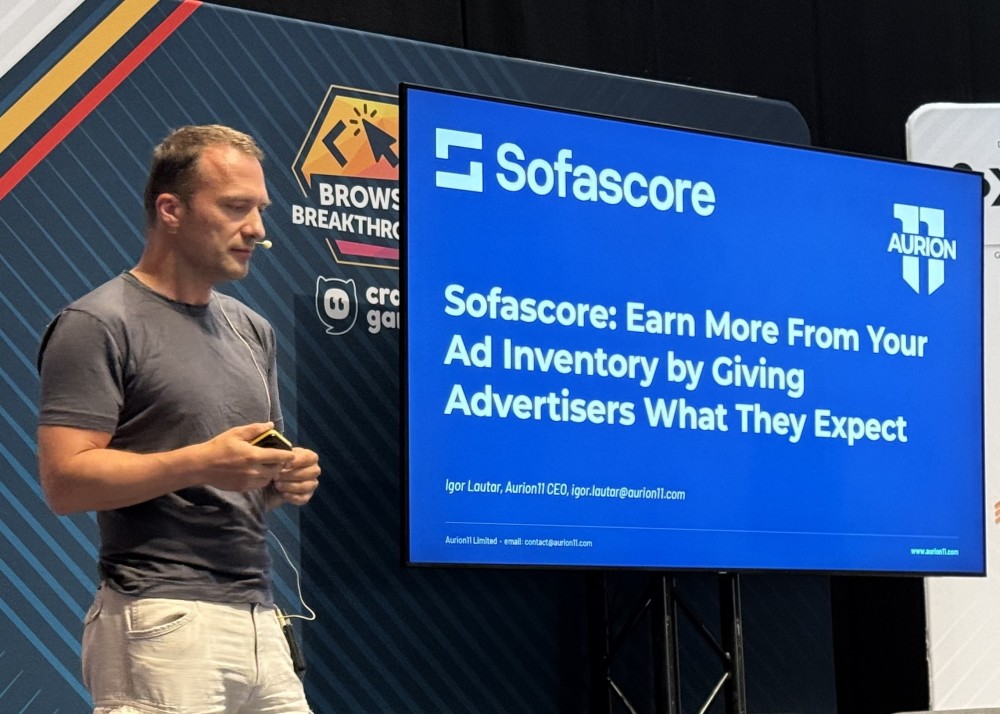
By Igor Lautar, Co-Founder and CEO, Aurion11

Mobile app developers spend years perfecting the product users see. This includes the onboarding flow, the core experience, the design decisions, and the monetization moments that feel native to the product. Every part of their experience gets tested, iterated, and obsessed over.
Then there’s the ad inventory. For most teams, it’s set up once, left to run, and then it’s rarely revisited. Fill rate looks fine, revenue arrives each month, and nobody asks any further questions.
This is exactly the gap we found when we started working with Sofascore, one of the world’s leading live score apps with 40 million monthly active users across more than 25 sports and 20,000 competitions, and a 4.8 star rating that makes it the highest-rated livescore app on the market.
The questions nobody was asking
Sofascore’s ad stack was performing. Their fill rate was healthy and there was no red flag anywhere in the dashboard.
As Sofascore CEO Zlatko Hrkać put it when he first reached out to us: are we doing the right thing, and what are we missing? This question is exactly what brought us together, and it led us to another that gets skipped surprisingly often: do you think of your ad inventory as a product you’re selling to advertisers, with its own quality standards?
Every advertiser wants their creative to be seen and interacted with. When an ad meets those expectations, advertisers bid more to reach that inventory again. When it doesn’t, they bid less, and nobody upstream tells you why.
We wanted to find out how much Sofascore’s stack was leaving on the table, simply because it seemed no one was looking for it.
Two levers, one 50% uplift
Two areas stood out. For game developers especially, where ad revenue often sits alongside in-app purchases as a primary revenue stream, these findings hit close to home. Refresh behavior is something the industry has started taking more seriously, but the difference between tuning it and tuning it well is often where publishers leave the most money behind. Viewability sees less optimization across the board, even though it is one of the metrics that most directly influences what premium advertisers are willing to pay.
First, we looked at banner refresh rate. Mediation platforms typically auto-manage this, and most teams leave the defaults in place. We manually tested and adjusted refresh timing on Sofascore’s banner placements, working through the tradeoffs between impression volume and ad quality.
This single change delivered a 30% increase in programmatic banner revenue from the exact same placements, with no new inventory, no new users, and no new design changes. eCPM dipped slightly, which is to be expected when refresh frequency rises, but impressions per session climbed enough to more than offset it.
The second was viewability. The IAB standard for display is 50% of pixels visible for one continuous second. Advertisers targeting premium spend increasingly filter on this metric, and we’ve seen premium brands push for viewability above 95%. Sofascore started at around 75%, on the low end of what we’d call “good.”
Through a series of iterative fixes deep in their ad-stack code, we brought this score up to 90%, right into “really good” territory. This improvement in traffic quality drove a further 20% uplift on top of the refresh gains, with eCPM holding stable and fill rate improving significantly.
Together, these two optimizations unlocked a 50% increase in programmatic banner revenue, all without any changes being made to the app or the user experience. The only thing that changed was how closely we looked at the inventory itself and how it was being presented to the demand side.
Ad inventory is a product
The lesson we learned from working with Sofascore is bigger than banner refresh rates or a viewability score. Ad inventory behaves like any other product a business sells. It has quality attributes which are measurable, and when you improve them, the market pays you more for them.
Most publishers never ask this question in the first place. Once inventory sells, fill rate looks fine, and there’s no alarm anywhere on the dashboard, nothing prompts a closer look.
Meanwhile, somewhere else in the chain, whether it be a network, an exchange or another intermediary, this unrealized value doesn’t disappear. Someone captures it and it’s usually not the publisher.
Understanding how the ad ecosystem works internally is what makes the difference. This knowledge is available to any team willing to look for it, and it’s what separates publishers who find these opportunities from those who don’t.
From manual work to automation
Our work with Sofascore was hands-on, and our team went placement by placement, testing refresh timing and iterating on viewability fixes over time. This kind of manual optimization is precisely what publisher teams don’t have the bandwidth to run themselves, and it’s why the value so often goes unclaimed.
It’s also why we built MDN11, our modular adtech suite with the Yield Optimizer at its core. The Yield Optimizer sits between a publisher’s app and their existing mediation stack, applying optimization logic to every ad request at the individual user level. Integration takes a single initialization call and everything is managed server-side, so there’s no rip and replace and no ongoing engineering burden.
MDN11 takes the kind of manual work that produced Sofascore’s results and builds it into a platform anyone can use. MDN11 includes ads refresh and caching logic, managing ad-units and their floors on user level impressions, on-the-fly AB testing, and much more. It empowers teams to deal with things that matter instead of hand-tuning their mediation configuration all day long.
The takeaway for developers
You don’t need to be an adtech expert to start asking better questions about your own inventory. Start with the basics: what’s your viewability score, and how does it compare to what premium advertisers are targeting? Is your refresh behavior tuned, or just running on defaults? Are you checking for side effects when you make changes, or just confirming the ad still shows?
Our findings with Sofascore show that these aren’t just marginal gains. Whether you are building games or apps, a publisher’s existing users, placements, and mediation setup can generate far more revenue once someone asks the right questions about the inventory itself. This opportunity lives inside almost every mobile app and game already live today, and the only thing missing, in most cases, is someone deciding to look.



Home of the Gamesforum events series and leading mobile game analysis. Discover everything you need to know about mobile games marketing and monetization.