Momentum Before Efficiency: What Global Publishers Miss in Japan
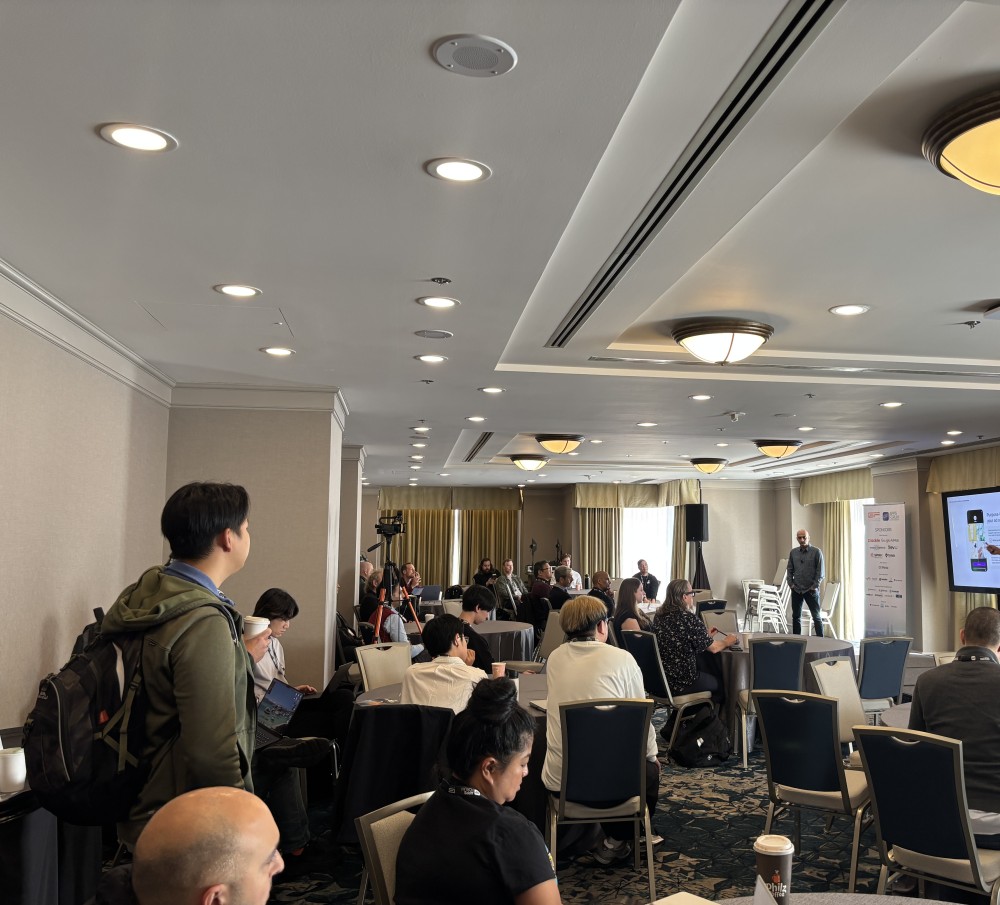
Every time Aki Sano, CEO at DeNA NA sits down with a global publisher, he hears the same thing: the playbook that works everywhere else doesn't work in Japan, and nobody can explain why. Drawing on 15+ years working between the Japanese and US markets, his session set out to answer that question.
A market worth the effort
Japan is one of the biggest games markets in the world, behind only China and the US and also has the highest revenue per paying user globally.
The appeal is player quality. "Once Japanese gamers lock into a game, they tend to stick to it for a long time, and they're open to paying," Aki said.
But the barrier is high. Seven of last year's top 10 grossing games came from domestic developers. "It's a really challenging market with a high barrier to entry, but it's still possible," he said.
Where the budget goes
The clearest signal of the difference is ad spend. In the US, around 80% of the marketing budget goes to digital. In Japan, it's roughly half, with the rest going to TV, out-of-home and other traditional media.
That doesn't make Japan old-fashioned. "Gen Z spend most of their time on digital media," Aki said. "However, when we look at the overall country statistics, non-digital media still plays the leading role."
Trust explains part of it. Aki shared research showing Japanese consumers trust online ads significantly less than TV, newspapers or magazines.
Why the US playbook stalls
The root of it is how players choose what to play.
"US players play what they like. They don't really care about what other people are playing," Aki said. "Japanese players, of course, play what they like. But at the same time, they also care about what everyone's into, what's booming, and how hot the fan communities are."
That's why his advice is to build momentum first and chase efficiency second. "Momentum is basically everyone's feeling, the atmosphere. And this is going to be the important factor in the purchase decision of Japanese players."
Skip that stage and you hit a wall. The problem is that you may not even notice. "You will never see the momentum factor in your dashboard. There's no momentum number," he said. "So even if you miss the momentum phase, you're probably not going to notice it. You know something's wrong, but you don't know why."
Without momentum, games risk being labelled "sketchy ads" or "suspicious" by players, and that perception sticks. "Once you build this type of perception, it is going to be difficult to change."
Three Cs for building momentum
Aki outlined three approaches, each of which can run at mass (nationwide, TV-led) or niche (targeted community) scale. "It doesn't necessarily mean that everyone needs a huge TV commercial," he said.
Community. Clash of Clans' 2013 entry into Japan remains the benchmark. Supercell partnered with Puzzle & Dragons, then the biggest game in the country, tapping its engaged player base before following up with a major station and Yamanote Line takeover in Tokyo. The game climbed to number four in the grossing charts.
At niche scale, Brawl Stars took the long route, launching in 2018 with a small circle of YouTubers and streamers targeting teenagers. "The momentum started from the high school classroom," Aki said. After Japanese teams won world championships in 2021 and 2025, and Supercell brought the world finals to Tokyo, the esports community snowballed. Brawl Stars reached number three in top grossing this summer. "This is considered the most successful case of the community and niche approach in the Japanese market."
Celebrity. Whiteout Survival took a different route to the US model of putting a star in an ad. It created an original dance for Japan, then got TV talent, comedians, actors, influencers, cosplayers and players all performing it, backed by a TikTok dance contest.
"From the Japanese people's perspective, they started seeing the same dance in many places. What's going on? Wow, this is something booming," Aki said. "That kind of interest automatically creates momentum."
The dance itself was deliberately simple. "The movement is quite easy to emulate. And the music sounds a little bit weird, but once you listen multiple times, it starts living inside your head."
Calendar. Match Factory bought a major TV spot on a New Year's special watched by around 20 million people, a moment when families gather around the TV. At niche scale, marked Golden Week with in-game items for each day of the holiday, including Children's Day.
"This is not a big approach, but still a good way to tell players: we understand you, and we understand your culture," Aki said.
Picking the right C
There's no single answer. Brawl Stars went community and niche because it wanted teenagers. Whiteout Survival went celebrity because it wanted a broad audience. Match Factory chose a New Year TV spot to reach casual players.
"Find the right audience and the right way to build momentum," Aki said. "It sounds easy, but doing it is quite difficult."
Two things make it hard. First, Japan is a high-context culture. "Even subtle differences, people will notice, and they will be judged," he said, pointing to details as small as font choice or lighting style. Second, momentum doesn't show up in the metrics.
His recommendation: work with a local navigator who understands both global efficiency and local heat, and choose carefully. "Partner selection is quite important.



Home of the Gamesforum events series and leading mobile game analysis. Discover everything you need to know about mobile games marketing and monetization.