UA Unlocked: Winning the Next Five Minutes, How Player Attention Is Changing UA
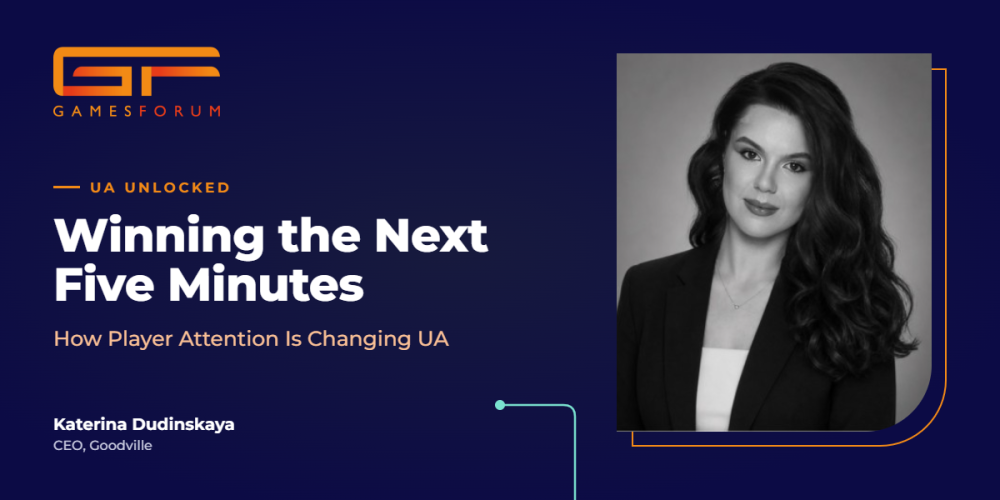
By Katerina Dudinskaya, CEO of Goodville
When we talk about competition in mobile gaming, we tend to focus on other games: who is acquiring the same audience, launching similar events, or bidding against us. But from the player’s perspective, the choice is much broader.
Someone with five free minutes might open Goodville, watch TikTok, scroll Instagram, or reply to a message. All of those experiences compete for the same moment. That changes how I think about user acquisition: getting someone to install a game is only the beginning. We have to give them a reason to choose it again tomorrow.
TikTok makes that challenge particularly clear. A player can open the app and immediately find something entertaining, with almost no effort. A game asks for more participation. Players need to understand what they are doing, make decisions, and invest in progress. That investment can create a lasting relationship, but we have to earn it.
We also use TikTok as a UA channel. I see no contradiction in those two roles. It’s a place where we can reach potential players and an experience competing for their time after they install.
The important question is what happens between those two moments. An ad can be entertaining enough to generate a click without giving someone a compelling reason to play. For Goodville, I want the creative to communicate the game itself: building a farm, exploring, progressing through a story, and discovering events. Our emotional well-being positioning gives the experience a distinctive identity, but the gameplay still has to make someone want to participate.
That connection becomes especially important when engagement changes.
If session time starts falling, my first question is where the change is happening. Is it affecting new players or established ones? Is it concentrated in a particular acquisition source, market, or platform? Are players spending less time in each session but returning more often, or are they disengaging altogether?
Those patterns require different responses. Shorter sessions alone don’t tell us that a channel has stopped working. If players continue returning and progressing, the experience may simply be fitting into smaller moments of their day. If retention and monetization are also weakening, we need to investigate further.
Changing spend makes sense when the evidence points to the quality of acquired users. Changing creative makes sense when the advertising sets expectations that the game does not meet. And when the same decline appears across established cohorts, product and live operations need to be part of the discussion.
For me, this is why UA, creative, analytics, and product need to work closely together. A campaign dashboard can show the symptom without explaining the cause.
Creator partnerships sit at that same intersection between discovery and player expectations. I see them as both a performance opportunity and a way to build familiarity with the game, but each campaign needs a clear purpose.
At Goodville, our approach to influencer activity has been to build in tracking and ROI measurement from the start. Reach and engagement help us understand a campaign, but they cannot tell us on their own whether it brought in players who stayed.
The creator also needs to be a credible match for the experience. I would rather see someone show what they enjoy about building their farm or completing an event than deliver a generic endorsement. The strongest partnership gives the audience a reason to imagine playing.
Over the next 12-18 months, I expect AI to accelerate the competition for attention. Its significance goes beyond helping marketing teams produce ads faster. It expands the range of content people can create: different visual styles, stories, characters, video formats, and personalized experiences. For games, that means competing with an even wider variety of entertainment.
For UA teams, the opportunity is to explore more genuinely different creative concepts. We can use AI to develop alternative narratives, test visual approaches, and adapt ideas for different audiences. But producing more content doesn’t automatically mean producing more effective advertising. The value comes from learning which ideas attract players who enjoy the game and stay.
I expect creative judgment to become more important as production becomes easier. Teams still need to decide what is worth testing, what feels distinctive, and whether the ad represents an experience the product can deliver. Otherwise, we risk filling channels with more content while learning very little.
Measurement will also need to look further beyond the install. Cheap acquisition is valuable when it leads to sustainable player value. I want to understand how cohorts retain, progress, and monetize over time, and whether a channel continues to work as we increase investment.
Product design has a role here too. If attention is becoming more fragmented, games need to offer satisfying progress in shorter visits while maintaining deeper goals that bring people back. UA cannot solve that alone.
Beyond Meta, AppLovin, Google, Unity, and TikTok, our acquisition activity has included Rewarded Networks. But I would distinguish between having experience with a channel and calling it a proven source of scalable growth.
A channel earns that description through repeatable cohort performance. It needs to bring in players who stay, generate sufficient value, and remain economically attractive as spend grows. A promising initial test is a starting point, not a guarantee.
Connected TV is another avenue I see potential in exploring. It offers a different setting for introducing a game: a larger screen and an opportunity to communicate its world, characters, and gameplay beyond a mobile feed. For a game like Goodville, I see room to test whether that setting can build interest and support acquisition.
I would approach CTV with clear measurement expectations. The journey from seeing an ad on television to installing a game on a phone is less direct than clicking a mobile ad. We would need to assess whether campaigns generate additional installs and valuable players, rather than relying only on attributed conversions. That makes CTV an interesting potential complement to the existing UA mix, with its own creative and testing requirements.
Our priority is to build a mix of channels that can earn their budgets consistently, while keeping enough room to test new opportunities.
Ultimately, the next stage of UA will require a better understanding of why people choose to spend time with a game. AI will give us more ways to create, and channels such as CTV will give us more places to reach people. We can buy an opportunity to introduce Goodville. The experience has to earn the next visit.



Home of the Gamesforum events series and leading mobile game analysis. Discover everything you need to know about mobile games marketing and monetization.