From Pressure to Progression: The New Rules of Social Casino Monetization with SciPlay
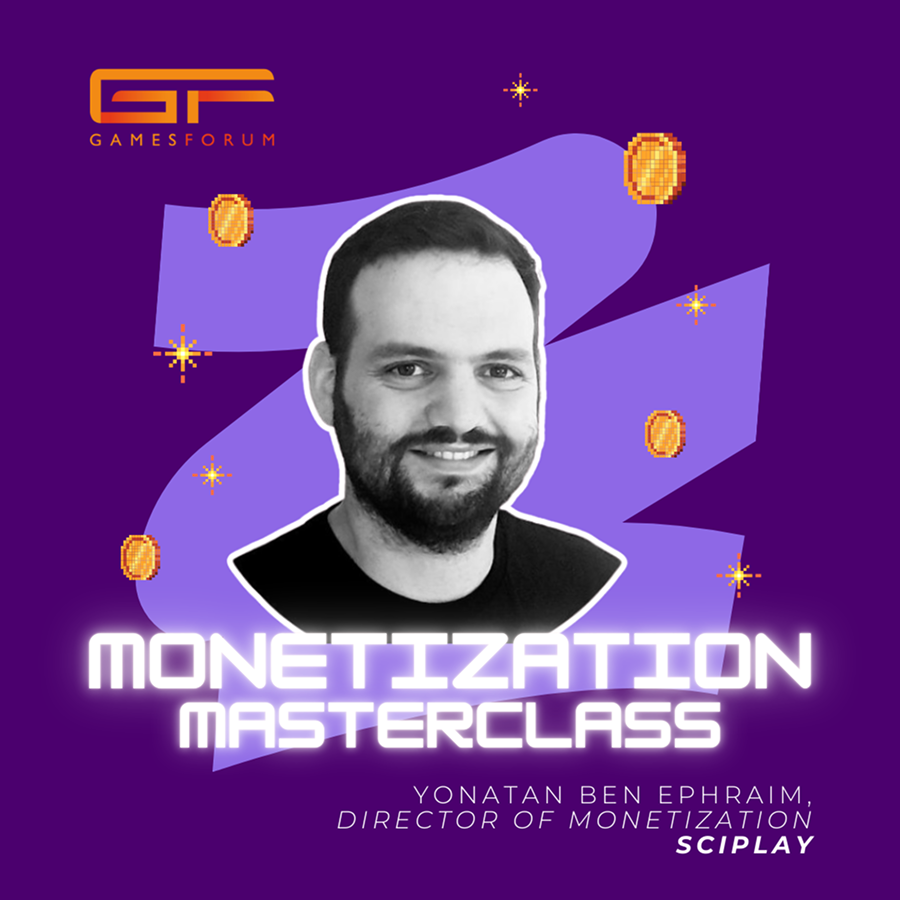
Yonatan Ben Ephraim, Director of Monetization at SciPlay, shares how his thinking around live-ops monetization has changed as games, and players, have matured. He talks through why monetization works best when it’s built into the experience from the start, how retention has become more important than quick revenue wins, and what it really takes to scale personalisation without overwhelming teams.
How has SciPlay’s approach to live-ops monetization evolved as player lifetimes have extended, and what metrics matter more now than two years ago?
Live-ops monetization at SciPlay has evolved into a far more holistic approach. Monetization is no longer treated as a separate layer sitting on top of the game. Instead, it’s designed alongside new content and features, so all of these elements come together as part of the game’s ongoing experience. New content continues to roll out over time, not just through live events, but through gameplay updates that help keep the experience fresh.
From a metrics standpoint, retention has taken on much greater importance. Revenue metrics still matter, but we increasingly see long-term monetization as a direct outcome of sustained engagement. As games mature and player bases stabilize, metrics like day-to-day retention, session frequency, and overall engagement depth matter more today than they did two years ago.
In social casino games, where content cadence is high, how do you decide when monetization design should lead, and when it should follow, player engagement signals?
Monetization isn’t something we think of as leading or following—it’s part of a broader player experience. The experience itself needs to feel complete and intentional, combining new content, new features, and monetization into a single cohesive system.
A good example of that is the launch of Quick Hit Rewards, our loyalty program. From the start, it wasn’t designed as just a progression or rewards feature with monetization added later. Monetization was planned as an integral part of the loyalty experience itself. We introduced multiple monetization tools around it, such as double point accumulation, earning loyalty points through spins, and limited-time tier upgrades.
In that context, it’s hard to say that monetization was either leading or following. It was embedded directly into the overall loyalty experience, supporting how players engage with the system and enhancing their sense of progression rather than steering behavior in isolation.
How do you balance personalisation in monetization (offers, pricing, pacing) with operational complexity at scale?
At scale, personalization only works if it’s built on simple, repeatable systems. Instead of trying to customize everything, we focus on a limited number of robust frameworks that can handle most scenarios on their own, without creating ongoing operational friction. The goal is for these systems to run reliably with minimal day-to-day intervention.
That also means being very intentional about when we break out of those patterns. We don’t add complexity by default—only when we’re confident it will create real value. In most cases, sticking to a clean, scalable setup beats chasing marginal gains that come with heavy operational cost.
A lot of this comes down to upfront planning. When we have a strong understanding of where the game is headed in the coming months, we can design more flexible and scalable systems early on. That makes it easier to support smarter personalization later through backend tooling and analytics, without turning operations into a bottleneck.
What role does player segmentation play today in driving incremental revenue versus retention, and how granular is “too granular”?
Player segmentation today is another key tool in shaping a holistic player experience, not just a way to push monetization harder. It allows us to give players the right thing, at the right time. The focus is less on how far we can push a player, and more on what will genuinely improve their experience and keep them coming back.
Over time, we’ve seen that this approach is far more sustainable than repeatedly pushing players to their limit. When segmentation is used to create a better-aligned and more enjoyable experience, retention naturally follows—and revenue becomes a long-term outcome rather than a short-term target.
When it comes to granularity, it’s always a balance between the value it creates and the operational cost it introduces. For our VIP players, we’re willing to go much deeper with more precise and granular segmentation, where the value clearly justifies the additional complexity. For the broader player base, we rely on broader segmentation models that are easier to operate at scale, while still delivering a strong and consistent player experience.
How do you evaluate the long-term monetization impact of new features versus short-term ARPDAU lifts?
We tend to look at this a bit differently. Instead of framing the discussion around short-term versus long-term impact, we start from the player. For every new feature, we ask what we want the player to do differently during a session, and how that change is expected to move specific metrics.
We then evaluate success by checking whether those intended behavior changes actually materialize. If they do, we’re comfortable that the feature can support both near-term performance and long-term growth—even if it doesn’t maximize immediate upside.
Looking ahead, which monetization levers do you believe are underutilised in social casino - and why haven’t they scaled yet?
Looking ahead, we expect to see much richer and more dynamic live-ops experiences. Advances in AI are already making it possible to create and iterate on content much faster, which naturally pushes monetization to become more content-driven rather than offer-driven.
As monetization becomes more tightly coupled with content, it enables more varied and cohesive session experiences. Instead of relying on a small number of high-pressure moments, monetization can be distributed across the session and tied to how the experience unfolds in real time.
This approach hasn’t fully scaled yet because it requires stronger tooling, faster production pipelines, and a different operational mindset. But as content creation continues to accelerate, session-based monetization becomes much more realistic to run at scale.

You might also like








Home of the Gamesforum events series and leading mobile game analysis. Discover everything you need to know about mobile games marketing and monetization.