February’s top grossing and trending games
January’s top grossing and trending story was very casual-focused, if you remember.
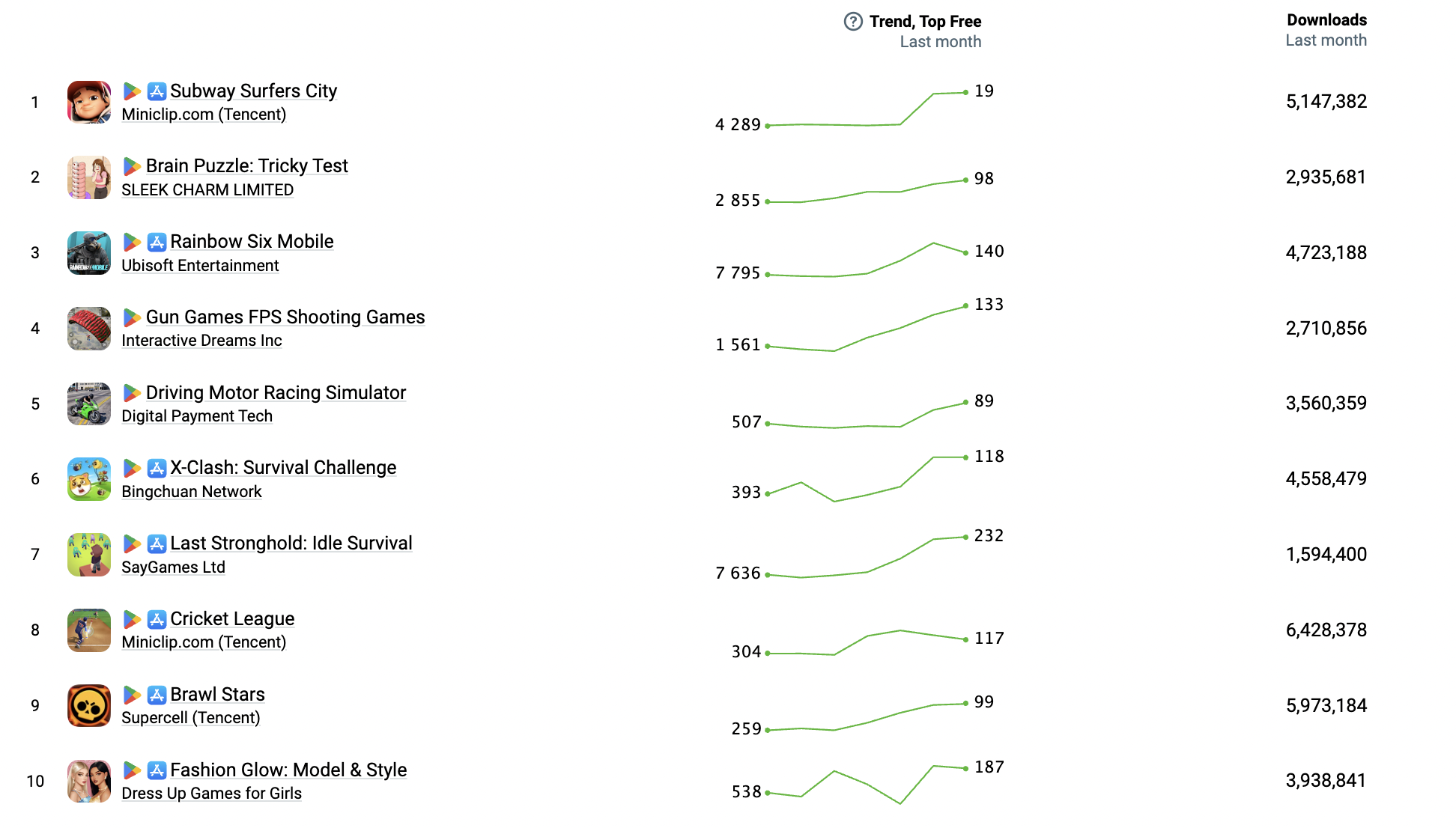
February’s list reads differently. It looks more launch-led and franchise-led. Big recognisable brands show up (Subway Surfers, Rainbow Six, Brawl Stars). Competitive multiplayer shows up more. And the long-tail, ad-driven “generic” titles are still there - but they’re sharing oxygen with majors.
Here's all the winners.
Top free
Notable mentions
Subway Surfers City — This one is pure sequel marketing. No subtlety. SYBO positioned it as “the next chapter,” and coverage leaned hard into recognisable beats: new setting (Subway City), new modes, seasonal content, and mechanical upgrades. The marketing “tell” is pre-registration plus a clear feature list (modes, districts, seasons). That’s textbook conversion optimisation for a mass audience. And the corporate context matters too. SYBO was acquired by Miniclip (which sits inside Tencent). That kind of backing usually correlates with more scale on UA and broader distribution leverage.
Rainbow Six Mobile — This is a classic console/PC IP goes mobile global rollout. Ubisoft publicly confirmed the worldwide launch date (23 Feb 2026) and framed it as the culmination of multi-year development, testing, and iteration. Our recent news roundup we published reported the international release on 20 Feb 2026, which likely reflects regional timing/windows, but either way the key point is, February had a clear “launch moment” for this title.
Brawl Stars — The live product is still running on strong seasonal cadence. On iOS, the App Store version history explicitly references “Brawl Pass Season 47: Brawlentine’s (February)” as part of its December–February update window. And there’s a larger brand-level marketing move too: esports structure. BLAST announced a multi-year partnership with the game to build a new competitive programme for 2026. That’s sustained top-of-funnel visibility and brand refresh at scale.
X-Clash: Survival Challenge — The marketing story here is… the ads. Our October round up called out “save the dog” style creatives and described them as aggressive and arguably misleading UA tactics that nonetheless drove big chart movement. User reviews echo that mismatch complaint (“ads are misleading,” “not like in ads”), which is usually a signal of exactly that style of performance marketing loop. So if this is in your February Top Free set, the simplest explanation is the oldest one: creatives that pull clicks, regardless of expectation gap. And that can scale fast.
Top grossing
Notable mentions
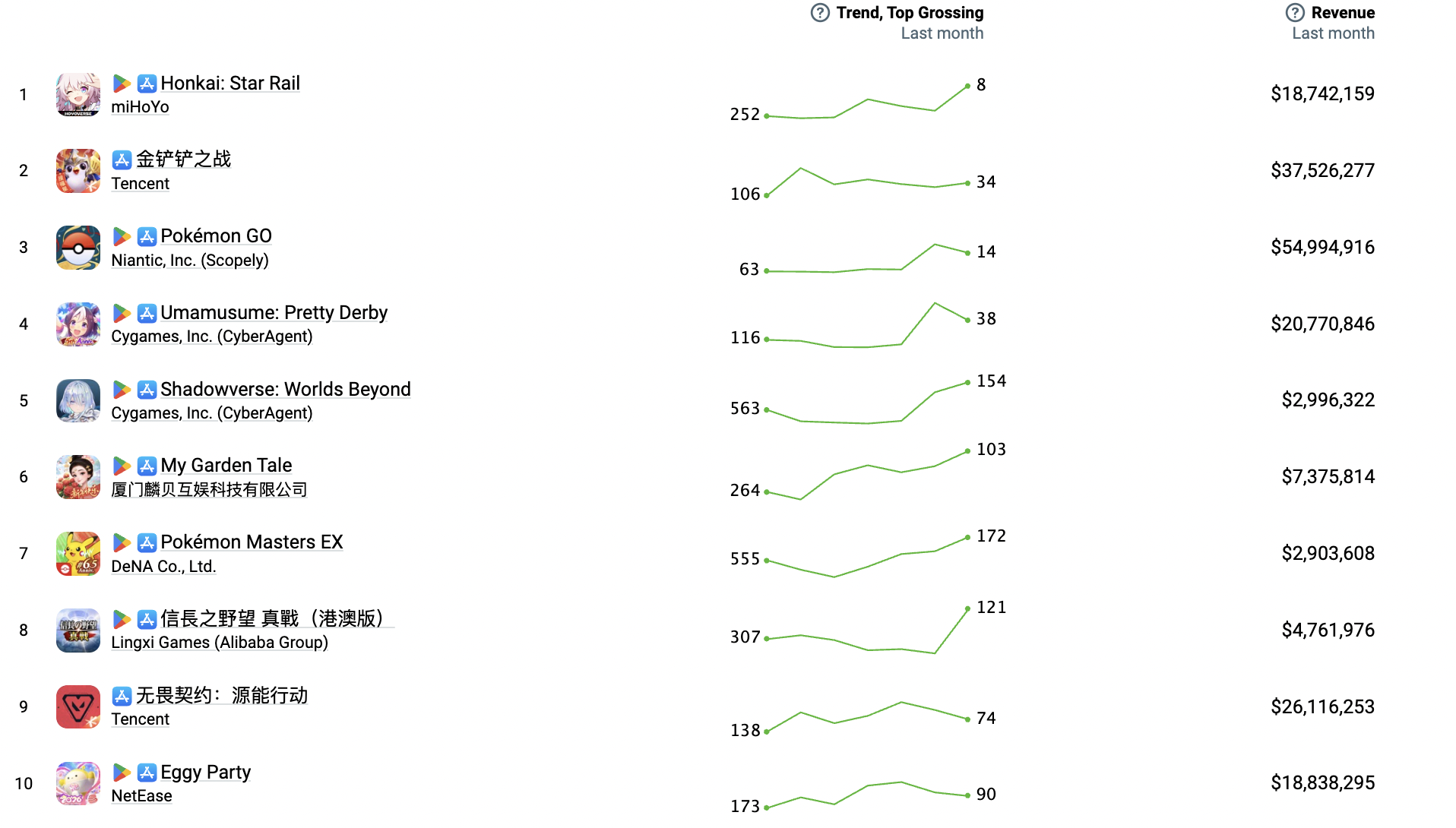
Pokémon GO — February monetization started with the calendar. The official site shows Los Angeles hosting an in-person GO Tour event (Feb 20–22, 2026). It also shows a second in-person location in Tainan (also Feb 20–22) and a global “Tour: Kalos” celebration on Feb 28 and Mar 1. And crucially: tickets and upgrades are part of the official framing (including the web store). That creates direct, time-boxed purchase prompts.
Honkai: Star Rail — $18m in revenue is thanks to, in, part, PlayStation’s official blog post (authored by the game team) announces Version 4.0 launching Feb 13, built around a new world (Planarcadia), new events, and system optimisations. It also describes explicit giveaway marketing: login rewards, 20 “Warps,” and even a free 5-star character selection callout in the promotional framing.
Even without seeing your underlying revenue dashboard, that’s a clear conversion week structure: new content, new gacha pull reasons, plus freebies to spike reactivation.
金铲铲之战 — This is seasonal monetization, which is framed for Lunar New Year. A repost of the game’s verified Weibo communications outlines a February 5 season beat (天选福星 / Chosen Fortune) and stacks multiple limited-time activities: login/participation rewards, new items/cosmetics, and discount structures (including a value card pitch and rebates tied to purchases). It’s a dense event calendar with layered incentives. The kind designed to pull spending forward into a holiday period.
Umamusume: Pretty Derby — In late February, the English channel messaging highlighted “Legend Races” returning, with a defined schedule window and reward structure (Star Pieces, upgrade resources). The marketing value is the format: limited-time competitive content with targeted rewards. It’s time pressure plus progression pressure.
Shadowverse: Worlds Beyond —Cygames’ release communications positioned the game with pre-registration, trailers, and launch incentives. Then it’s sustained by competition and community programming. A February 2026 Online Championship watch-party video is one small public signal that organised play content is still driving attention.
Marketing patterns worth noting
On the download side, strong brands and global launches are doing a lot of the work. When recognisable IP shows up with a coordinated rollout: trailers, creator coverage, pre-registration, it can still cut through a very crowded mobile market.
On the revenue side, the pattern is even clearer. Live ops calendars remain the real monetization engine. Events, version updates, seasonal content, and limited-time offers continue to create short windows where spending spikes.
Put simply: February reinforces something the industry already suspects: IP drives installs, but structured live service drives revenue.
You might also like






Home of the Gamesforum events series and leading mobile game analysis. Discover everything you need to know about mobile games marketing and monetization.