Here’s what will define the next wave of organic growth for mobile games, with Tactile Games
The spectre of managing organic growth looms large over mobile gaming teams around the world. So much so that Leveraging Organic Growth Strategies was identified as one of the main challenges for UA teams in our recently released 2026 Mobile Game Challenges Report.
Aliaksandra Shabeka, Senior Product Marketing Manager at Tacticle Games, is here to break through the noise and provide some real tried-and-tested methods in boosting organic growth through ASO, AI-supported optimisation, brand recognition, and more.
With CPIs rising across most genres, how has your approach to organic growth at Tactile Games evolved over the past two years?
As CPIs kept climbing, we had to rethink organic growth and treat it as a core part of our strategy rather than something that just “supports” paid UA. Over the last two years, we’ve put much more focus on ASO, stronger seasonal moments, and consistent store updates.
We also worked on building a bigger presence across our own channels - social and emails - to create more touchpoints outside of paid traffic. Featuring has also played a big role, especially during big content and feature releases or season launches.
Overall, our approach has become more proactive, integrated, and long-term.
As a Senior Product Marketing Manager, what are the most impactful levers you’ve found for boosting organic discoverability without relying heavily on paid UA?
One of the strongest levers for us has been consistently applying for featurings. Not just for big updates, but also for smaller in-app events and seasonal moments. Regular communication with the stores helps us secure visibility spikes throughout the year, which naturally boosts organic installs. Alongside featurings, ongoing ASO work - especially keyword expansion and visual testing - has been essential for keeping that momentum going.
We also rely heavily on our own channels like social media to support organic traffic outside of the stores. When these elements work together, we see steady, sustainable growth without depending on paid UA.
Tactile Games is known for its strong brand identity. How important is brand consistency in driving long-term organic retention and word-of-mouth growth?
Brand consistency is very important because it makes our games instantly recognizable, both in the stores and in our marketing. When players feel familiar with our characters, tone, and style, they’re more likely to return and recommend the game to others. It also helps us build trust - players know what type of experience they can expect.
For organic retention, having a clear brand world helps us communicate new content and seasonal updates in a more engaging way. Over time, this consistency creates a stronger emotional connection with the audience.
How do you align product, creative, and marketing teams to ensure that organic strategies are supported across the entire player journey?
We bring all teams into the conversation early so that organic opportunities are part of the roadmap, not an afterthought. For every major feature or event, we look at how it can support ASO (including store visibility), featuring, and CRM. Regular syncs help ensure the creative team understands our messaging needs and the product team knows how features connect to growth. We also share performance results openly, so everyone sees how their work contributes to organic gains. This keeps us aligned on the same goals.
In an era of high CPIs, which organic channels: ASO, cross-promotion, community, influencer, UGC, are delivering the strongest ROI for you?
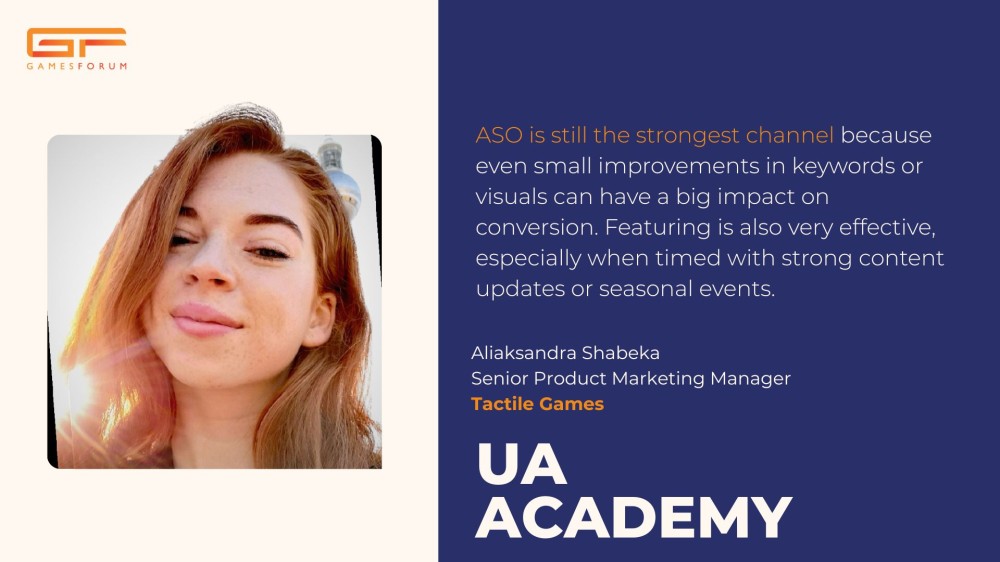
ASO is still the strongest channel because even small improvements in keywords or visuals can have a big impact on conversion. Featuring is also very effective, especially when timed with strong content updates or seasonal events. Beyond the stores, our owned channels- social media, email, and the web shop - have become key drivers for recurring organic traffic.
What role does product-driven growth (features that inherently drive invitations, virality, or social sharing) play in your strategy at Tactile?
Product-driven growth is becoming more important as we look for ways to strengthen the player journey without added UA spend. Features that increase engagement or bring players back naturally - like seasonal events, content updates, or special rewards - help boost organic activity on their own. We try to design updates that feel exciting enough for players to talk about or revisit after a break. While we don’t focus on virality features, we do aim to create content that drives curiosity and reactivation.
How are you measuring the impact of organic initiatives, especially when attribution becomes complicated across paid and organic surfaces?
We use a combination of store conversion data, keyword rankings, and organic traffic baselines to understand what’s moving the needle. Instead of trying to get perfect attribution, we focus on whether our organic metrics trend up after specific initiatives, like ASO updates or seasonal campaigns.
We also look at player re-engagement through email and push notifications to identify which messages or promotions bring users back. Over time, these patterns give us a clear picture of which organic activities actually influence growth. It’s more about direction and impact than 100% precise attribution.
Looking ahead, what innovations or shifts do you think will define the next wave of organic growth for mobile games in 2025 and beyond?
I truly believe that brand and personalization will grow and become the key tool for organic growth. Players will expect store content, CRM messaging, and even creatives to match their preferences and marketers will rely more on making their brand memorable other than simply investing money into paid campaigns. Featuring opportunities will remain important, but I expect app stores to highlight more event-driven content, giving LiveOps a bigger organic role. AI-supported optimization will help teams iterate faster on keywords, visuals, and messaging.
Overall, organic growth will reward studios that build strong brands and keep players engaged across multiple touchpoints.

Don't miss out on Aliaksandra's keynote 'Organic Growth in the Era of High CPIs' at Gamesforum Barcelona.
You might also like







Home of the Gamesforum events series and leading mobile game analysis. Discover everything you need to know about mobile games marketing and monetization.